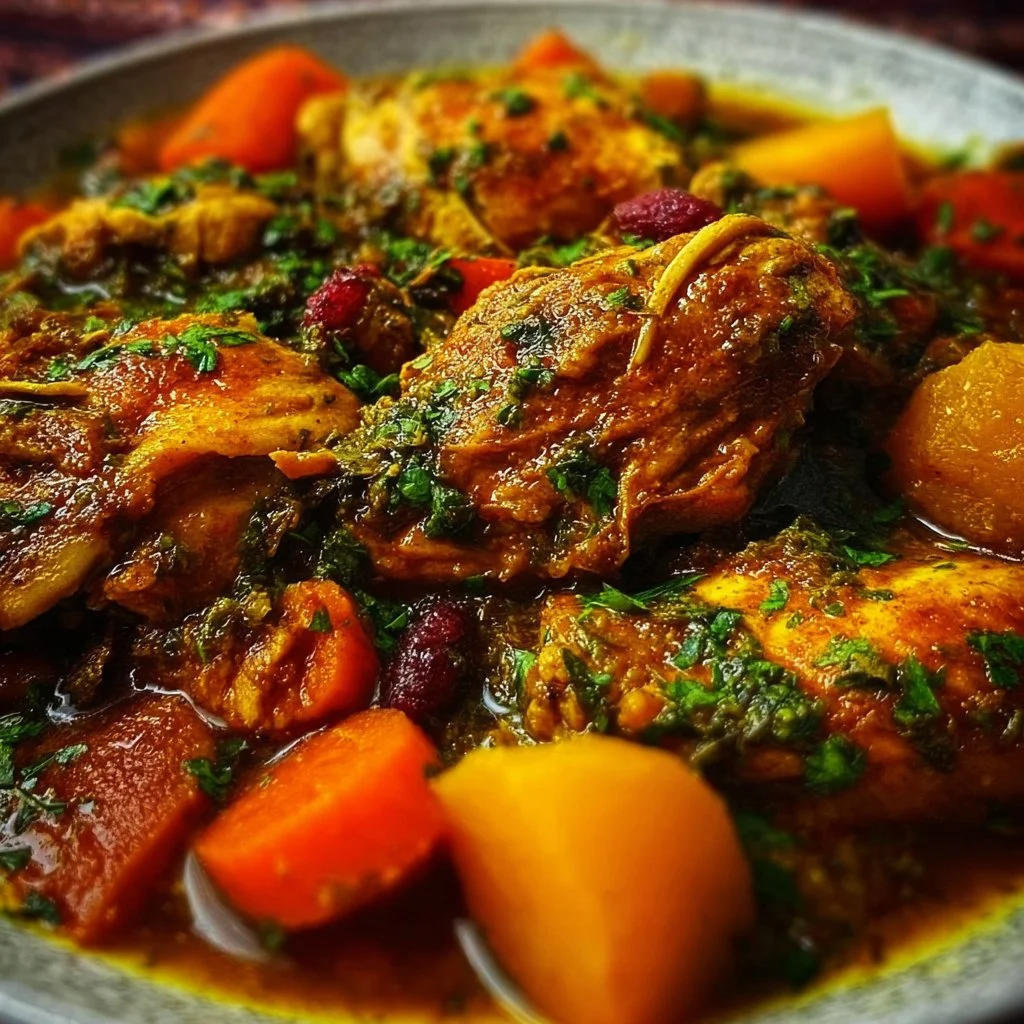
Moroccan Chicken Stew is a comforting dish that transports you to the vibrant markets of Morocco with every bite. This hearty stew combines tender chicken thighs with a mix of aromatic spices, vegetables, and sweet dried fruit, resulting in a flavorful and satisfying meal. Perfect for family dinners or casual gatherings, this recipe not only fills your belly but also warms your heart.
Why We Love This Moroccan Chicken Stew Recipe
There’s something truly magical about the way Moroccan Chicken Stew brings warmth and flavor to your dining table. The harmony of spices creates an incredible depth of taste that keeps you coming back for more. With the perfect balance of savory and slightly sweet elements, you’ll enjoy a unique dining experience that excites your taste buds. It’s also a one-pot meal, making clean-up a breeze. Plus, the combination of tender chicken, chickpeas, and delicate apricots ensures you’re getting both protein and nutrients in a delightful package. It’s comfort food that still feels special, making it perfect for any occasion.
Ingredients about Moroccan Chicken Stew
List of ingredients with measurements
- 2 lbs (approximately 1 kg) chicken thighs, bone-in, skinless
- 2 tablespoons olive oil
- 1 large onion, finely chopped
- 3 cloves garlic, minced
- 1 teaspoon ground cumin
- 1 teaspoon ground coriander
- 1/2 teaspoon ground ginger
- 1/2 teaspoon ground cinnamon
- 1/4 teaspoon cayenne pepper (optional, for heat)
- 1 teaspoon turmeric
- 1 can (14 oz) diced tomatoes, undrained
- 2 cups chicken broth
- 1 cup cooked chickpeas (or one 15 oz can, drained and rinsed)
- 1/2 cup dried apricots, chopped
- 1/4 cup green olives, pitted and sliced
- Salt and freshly ground black pepper, to taste
- Fresh cilantro or parsley, chopped for garnish
- Cooked couscous or rice, for serving
How to Make Moroccan Chicken Stew Directions
Making Moroccan Chicken Stew is an enjoyable process that infuses your kitchen with delightful aromas. Begin by heating the olive oil in a large pot or Dutch oven over medium heat. Once the oil is hot, add the finely chopped onion and sauté for about five minutes, or until it becomes translucent and tender. Next, add the minced garlic along with the ground cumin, coriander, ginger, cinnamon, cayenne pepper (if you crave some heat), and turmeric. Stir these spices for 1-2 minutes until they are fragrant, creating a lovely base for your stew.
Now it’s time to increase the heat to medium-high and introduce the chicken thighs to the pot. Season them generously with salt and freshly ground black pepper. Brown the chicken on both sides for about 4-5 minutes until you achieve a nice golden color. This step is crucial for enhancing the stew’s flavor.
Next, pour in the canned diced tomatoes, chicken broth, chickpeas, and chopped apricots. Stir well to combine all the ingredients, ensuring that the chicken is submerged in the flavorful liquid. Bring the mixture to a rolling boil, then reduce the heat to low and cover the pot. Allow the stew to simmer gently for 30-40 minutes, or until the chicken is fully cooked and tender.
Once the chicken is done, add the sliced green olives to the pot, stirring them in to enhance the stew’s flavor. It’s important to taste the stew at this stage and adjust the seasoning with more salt and pepper if needed. The blend of spices, the sweetness from the apricots, and the saltiness from the olives should create a balanced flavor profile. Finally, serve the Moroccan Chicken Stew hot over a bed of cooked couscous or rice, and don’t forget to garnish it with fresh chopped cilantro or parsley for a vibrant touch.
How to Serve Moroccan Chicken Stew
Serving Moroccan Chicken Stew is an opportunity to showcase the vibrant flavors and colors of your dish. To start, ladle the hot stew into shallow bowls, making sure each serving contains a generous portion of chicken, chickpeas, and beautifully tender vegetables. Serve it over a fluffy bed of couscous or steaming rice, which will absorb the delicious sauce.
For added garnish, sprinkle freshly chopped cilantro or parsley on top to not only enhance the look of the dish but also to introduce a fresh note that contrasts beautifully with the warm spices. You may also consider serving a side of warm bread to soak up the rich broth. If you’re feeling adventurous, pair it with a refreshing yogurt sauce or a side salad to cleanse your palate and add texture to the meal. The combination of flavors and textures creates a stunning presentation that’s sure to impress your guests.
Expert Tips: Moroccan Chicken Stew
Creating the perfect Moroccan Chicken Stew comes down to a few expert tips that can elevate your dish. Firstly, don’t rush the browning process of the chicken; it’s essential for developing deep flavors in the stew. Pat the chicken thighs dry with paper towels before seasoning to obtain a nice sear.
Consider adjusting the spice levels according to your taste preference. If you enjoy a bit of heat, don’t be shy with the cayenne pepper or even add a pinch of paprika for additional flavor complexity. You might also try adding other vegetables like carrots, zucchini, or bell peppers to increase nutritional value and diversity of taste.
For a twist, experiment with different kinds of dried fruits—such as raisins or prunes—that can also add a delightful sweetness. If you have some time to spare, marinating the chicken in your spices and olive oil for a few hours or overnight can enhance the flavor even more. Lastly, make sure to taste and adjust the seasoning throughout the cooking process; a well-seasoned stew is key to a delicious final dish.
How to Store Moroccan Chicken Stew
Storing your Moroccan Chicken Stew correctly ensures you can enjoy it again later. Once the stew has cooled down to room temperature, transfer it into an airtight container. You can keep the stew in the refrigerator for up to three days. Be sure to label the container with the date you made it for reference.
If you want to store the stew for a more extended period, consider freezing it. Portion out the stew into freezer-safe containers, leaving some space for expansion as it freezes. It can last in the freezer for up to three months. When you’re ready to enjoy your stew again, thaw it in the refrigerator overnight before reheating on the stove or in the microwave until hot.
Variation of Moroccan Chicken Stew
Experimenting with your Moroccan Chicken Stew allows you to tailor the dish to your preferences or dietary needs. One delightful variation is to replace the chicken thighs with chicken breasts for a leaner option. However, keep in mind that chicken breasts may cook faster, so adjust your cooking time accordingly.
For a vegetarian version, you can omit the chicken and use hearty vegetables like eggplant, butternut squash, or mushrooms as the main ingredient. Adding in additional beans can provide protein and texture. Another interesting twist involves incorporating spices like saffron, which will enrich the dish with a beautiful aroma and color.
If you want to make it a bit heartier, consider serving it with roasted vegetables on the side or adding some diced potatoes to the stew as it simmers. The combination of flavors can create a warming dish perfect for any season.
Frequently Asked Questions about Moroccan Chicken Stew
What is Moroccan Chicken Stew made of?
Moroccan Chicken Stew is primarily made with chicken thighs, aromatic spices, chickpeas, dried apricots, and a flavorful broth. The dish usually includes diced tomatoes and is often served over couscous or rice.
Can I use different meat in Moroccan Chicken Stew?
Yes, you can use different meats such as turkey or lamb. Each meat will provide a unique flavor, but cooking times may vary, so adjust them accordingly.
Is Moroccan Chicken Stew spicy?
The spice level in Moroccan Chicken Stew can be adjusted according to your taste. The base spices provide flavor without too much heat, while cayenne pepper can be added for those who enjoy a kick.
How long does it take to make Moroccan Chicken Stew?
The total time to make Moroccan Chicken Stew is approximately 1 hour, including preparation and cooking time. However, the stewing process allows the flavors to meld beautifully, enhancing the overall taste.
Can I make Moroccan Chicken Stew in advance?
Absolutely! Moroccan Chicken Stew can be made in advance and stored in the refrigerator or freezer. In fact, the flavors tend to develop further if it sits for a day before serving.

Moroccan Chicken Stew
Ingredients
Main Ingredients
- 2 lbs chicken thighs, bone-in, skinless Approximately 1 kg
- 2 tablespoons olive oil
- 1 large onion, finely chopped
- 3 cloves garlic, minced
- 1 teaspoon ground cumin
- 1 teaspoon ground coriander
- 1/2 teaspoon ground ginger
- 1/2 teaspoon ground cinnamon
- 1/4 teaspoon cayenne pepper Optional, for heat
- 1 teaspoon turmeric
- 1 can (14 oz) diced tomatoes, undrained
- 2 cups chicken broth
- 1 cup cooked chickpeas (or one 15 oz can, drained and rinsed)
- 1/2 cup dried apricots, chopped
- 1/4 cup green olives, pitted and sliced
- Salt and freshly ground black pepper, to taste
- Fresh cilantro or parsley, chopped for garnish
- Cooked couscous or rice, for serving
Instructions
Preparation
- Heat the olive oil in a large pot or Dutch oven over medium heat.
- Add the finely chopped onion and sauté for about five minutes, or until it becomes translucent and tender.
- Add the minced garlic, ground cumin, coriander, ginger, cinnamon, cayenne pepper (if using), and turmeric. Stir and cook for 1-2 minutes until fragrant.
Cooking
- Increase heat to medium-high and add the chicken thighs, seasoning generously with salt and pepper.
- Brown the chicken on both sides for about 4-5 minutes until golden color is achieved.
- Pour in the canned diced tomatoes, chicken broth, chickpeas, and chopped apricots. Stir to combine and ensure chicken is submerged.
- Bring to a rolling boil, then reduce heat to low and cover. Allow to simmer gently for 30-40 minutes, until chicken is fully cooked and tender.
- Add the sliced green olives and stir to enhance the flavor. Adjust seasoning with salt and pepper as needed.
- Serve hot over couscous or rice, garnished with fresh chopped cilantro or parsley.